
Table of Contents
Fix hose reel
Common Hose Reel Problems
Most failures fall into a few categories:
1) Reel Won’t Spin
Causes:
- Dirt or rust in the axle
- Bent frame
- Overtightened bolts
- Broken internal parts
2) Hose Won’t Retract (Auto-Rewind Models)
Causes:
- Weak or broken spring
- Tangled hose inside
- Lock mechanism stuck
3) Water Leaking at Reel Connection
Causes:
- Worn rubber washer
- Loose fittings
- Cracked inlet connector
4) Hose Tangling or Kinking
Causes:
- Improper winding
- Twisted hose
- Reel overloaded

Tools You May Need
Basic fixes usually require:
✔ Screwdrivers
✔ Adjustable wrench
✔ Replacement washers
✔ Silicone grease
✔ Cleaning cloth
✔ Utility knife
✔ Replacement fittings
No special tools are normally required.

Step-by-Step guide to Fix hose reel
Step 1 — Disconnect Water
Turn off water supply and remove hose pressure before working.
Step 2 — Remove Hose
Fully unwind and detach the hose so you can inspect the reel mechanism.
Check for:
- Cracks
- Kinks
- Loose connectors
- Split hose ends
Step 3 — Check Reel Rotation
Spin the empty reel.
If it feels:
- Stiff → clean and lubricate axle
- Grinding → debris inside
- Loose → tighten mounting bolts
Clean axle area and apply silicone lubricant.
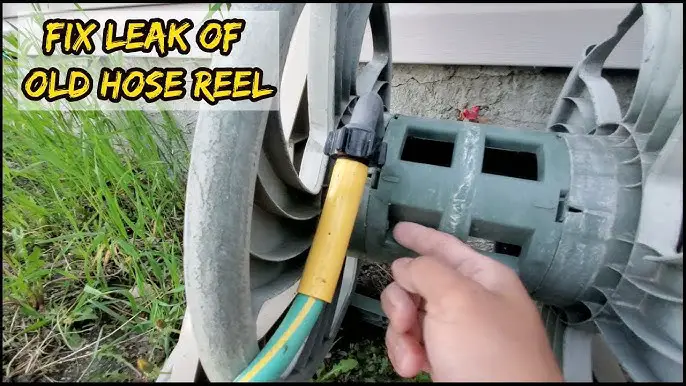
Step 4 — Fix Leaks
Most leaks happen at the reel inlet.
Fix:
- Remove connector.
- Replace rubber washer.
- Tighten fittings firmly.
- Check for cracks in plastic parts.
A $1 washer often solves the issue.
Step 5 — Fix Auto-Retract Reels
If the hose won’t rewind:
• Pull hose fully out to release lock
• Slowly guide hose back while helping it align
• If spring is weak, internal repair may be needed
Warning: spring units are under tension. If unsure, service or replace.
Step 6 — Rewind Hose Properly
Wind hose evenly across the reel width to prevent tangles.
Tip:
Guide hose left to right while winding.
When to Replace Instead of Repair
Replacement makes more sense if:
- Reel frame is cracked
- Internal spring is broken
- Plastic connectors are brittle
- Unit is extremely cheap quality
In these cases, repairs may not last long.
Maintenance Tips to Prevent Future Problems
✔ Drain hose before winter
Freezing water damages reels.
✔ Store out of sun when possible
UV light weakens plastic parts.
✔ Keep hose straight while winding
Prevents kinks.
✔ Lubricate once per season
Keeps rotation smooth.
✔ Replace washers yearly
Stops small leaks early.

Hose Reel Buying Advice (If You Upgrade)
Better reels usually include:
• Metal frame instead of plastic
• Smooth crank handle
• Brass fittings
• Wide reel drum
• Locking wheels (for carts)
• Slow-return mechanism (auto reels)
Spending slightly more usually means fewer repairs.
Quick Repair Checklist
If your hose reel fails, check:
✅ Hose not twisted
✅ Axle spins freely
✅ Bolts tight
✅ Washers intact
✅ No cracked connectors
✅ Hose wound evenly

FAQs
Why does my hose always tangle?
Uneven winding and hose twisting cause tangles
Can a retractable reel spring be repaired?
Sometimes, but replacement is often safer.
Why does my reel leak only when turned?
Rotating connector washer is worn.
How long should a hose reel last?
5–10 years with maintenance.
Are metal reels better than plastic?
Yes, especially for long hoses.
How often should I lubricate a hose reel?
Once or twice per season is usually enough for smooth operation.
Can freezing weather damage my hose reel?
Yes. Water left inside can freeze and crack connectors or internal parts. Always drain before winter.
Are metal hose reels better than plastic ones?
Yes, especially for long or heavy hoses. Metal frames resist cracking and last longer.
Final Verdict
Most hose reel problems are simple fixes, often solved with cleaning, tightening, or replacing washers. Proper winding and seasonal maintenance can easily double the life of your reel.
A 15-minute repair can save buying a new one.
READ ALSO: Pressure washer hoses recommendations