
Table of Contents
4gpm VS 8gpm Pressure Washers
🧠 Pressure Washer Basics: GPM, PSI & Cleaning Power
📌 GPM (Gallons Per Minute)
- Measures how much water the machine delivers per minute — the volume of water flow.
- Higher GPM means faster rinsing and coverage over large surfaces.
- GPM influences speed and efficiency; more water moves dirt and debris away faster.
📌 PSI (Pounds per Square Inch)
- Measures the force of the water — how hard it hits the surface.
- Higher PSI excels at loosening stubborn dirt, stains, and grime.
- PSI and GPM together determine the total cleaning power (Cleaning Units = PSI × GPM).
🤝 GPM vs PSI Relationship
- PSI breaks dirt loose; GPM washes it away.
- A washer with higher GPM but moderate PSI often finishes faster than a high-PSI/low-GPM unit.
🔍 4 GPM Pressure Washers — Mid-Range, Balanced Power
Best for: Homeowners, DIYers, small-to-medium jobs
✅ Advantages
- Great balance of pressure and flow for many common tasks like driveways, siding, decks, patios, cars, and light concrete.
- Easier to supply from a standard garden tap without special water tanks.
- Good entry point for occasional use or smaller properties.
⚠️ Drawbacks
- Slower rinse speed compared to 8 GPM models — bigger jobs take longer.
- Not ideal for heavy commercial use or very large surfaces.
📊 Typical Flow
- 4 GPM means moderate water volume — good for balanced cleaning speed with effective penetration.
🧰 Recommended 4 GPM Models
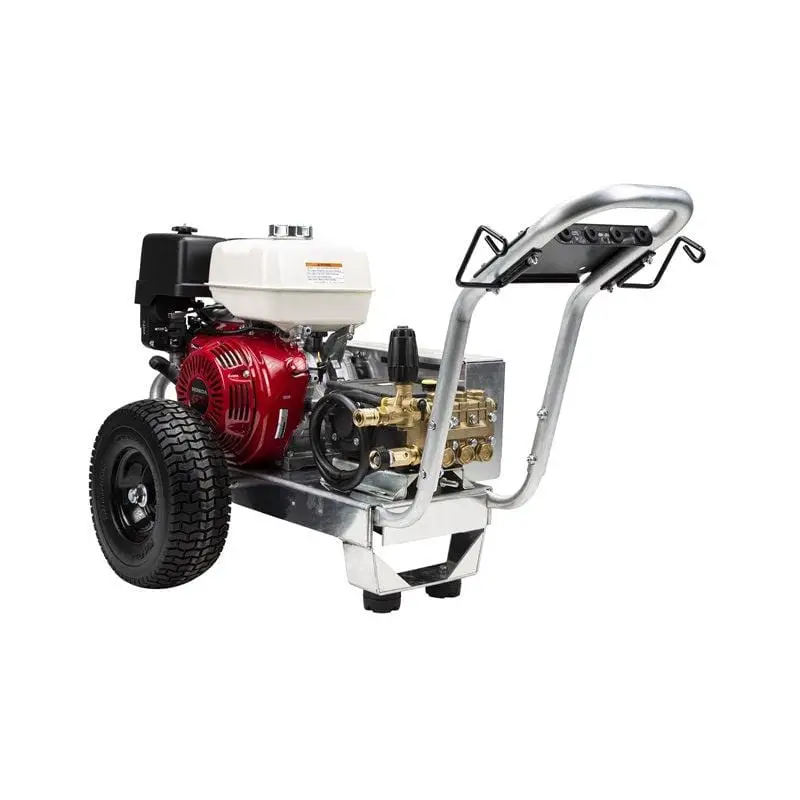
- BE 4000PSI Gas Pressure Washer, @ 4.0 GPM – gas-powered unit with HONDA engine; robust build, good for residential + contractor use.
- Eagle Pressure Washer EPW‑3600A 4.5 GPM – slightly higher flow ~4.5 GPM, great mid-duty option.
- Haige Pressure Washer Hg‑dgpw1908 – petrol engine, solid budget choice for outdoor cleaning.
🚀 8 GPM Pressure Washers — High-Volume, High-Efficiency
Best for: Contractors, commercial cleaning, large surfaces
✅ Advantages
- Much faster cleaning and rinsing — excellent for parking lots, industrial sites, fleet washing, big decks.
- Reduces job time significantly compared to lower-flow machines.
- Supports large surface cleaners (20–32 inches).
⚠️ Drawbacks
- Requires much more water supply — often needs buffer tanks or high-flow sources.
- Higher upfront cost — professional-grade machines are more expensive.
- Chemical dilution: high GPM means cleaning solutions get diluted faster, sometimes needing reapplication for deep stains.
📊 Typical Uses
- Large driveways, service lots, commercial building exteriors, heavy-traffic concrete.
🧰 Recommended 8 GPM Model
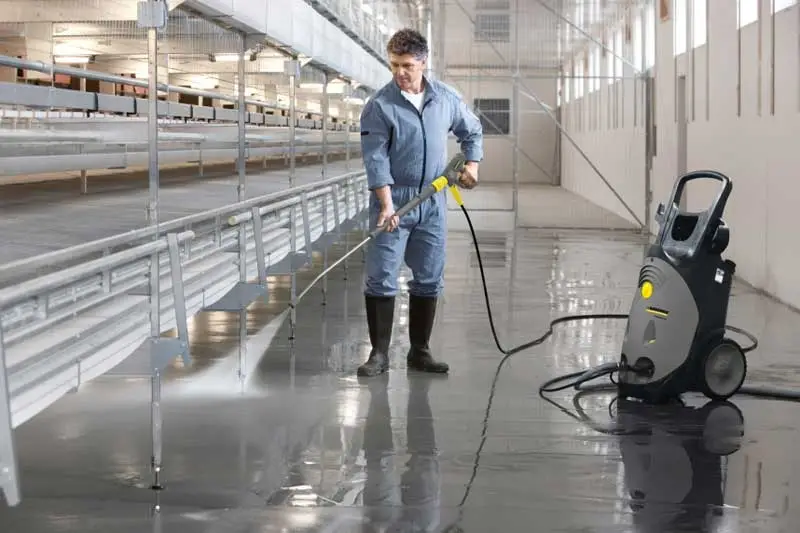
- Kärcher HD 8/18‑4 M Pressure Washer – commercial-grade 8 GPM washer with sturdy performance, ideal for contractors.
📌 Quick Comparison: 4 GPM vs 8 GPM
| Feature | 4 GPM | 8 GPM |
|---|---|---|
| Speed | Moderate | Very fast |
| Best for | Home use, medium jobs | Commercial, large surfaces |
| Water Supply Needs | Standard tap OK | Requires high-flow or buffer tank |
| Cost | Lower | Higher |
| Efficiency | Good | Excellent (especially for big areas) |
| Cleaning Power (balanced) | Good | Optimized for speed |
🛠 Choosing Based on Your Use
🏡 Homeowner / DIY
- 4 GPM is usually more than enough — easier to operate, stores easily, and handles most tasks.
🧑🔧 Part-Time Contractor
- A 4–5.5 GPM machine hits the sweet spot: faster jobs but still manageable water needs.
👷 Professional / Commercial
- 8 GPM+ shines here — big jobs finished quickly, high throughput.
🧠 Final Tips Before You Buy
💧 Water Source Matters
- Check your available flow rate before buying — an 8 GPM washer can easily overwhelm a normal garden supply.
⚖️ Balance GPM & PSI
- Don’t fixate on PSI alone — a lower PSI with higher GPM may outperform higher PSI with weak flow for big tasks.
📐 Task First, Power Second
- A high-flow model doesn’t always mean better cleaning for delicate surfaces; match PSI/GPM to the surface type.
FAQs
What does “GPM” mean?
GPM stands for Gallons Per Minute — the flow rate of water the pressure washer delivers.
Higher GPM = more water moving = faster rinsing and cleaning of large areas.
Works together with PSI (pressure force).
Both determine total cleaning effectiveness.
Is higher GPM always better?
Not always.
8 GPM means faster coverage — great for large commercial jobs.
But you need enough water supply to support it.
For small areas, a lower GPM (like 4 GPM) is often more efficient and easier to work with.
Rule of thumb:
👉 Match GPM to the size of the job and your water source capacity.
How does GPM affect cleaning speed?
8 GPM cleans large surfaces much faster than 4 GPM.
More water means more rinsing power and less re-work on big jobs.
Does higher GPM mean more pressure (PSI)?
No.
GPM is water volume.
PSI is water force.
You can have:
High GPM + Low PSI
High PSI + Low GPM
Each combination affects cleaning differently.
Which cleans better — higher PSI or higher GPM?
It depends on the task:
High PSI = better at loosening stuck-on dirt.
High GPM = better at washing away debris.
For big surfaces, a higher GPM often finishes jobs quicker.
READ ALSO: Pressure washer hoses recommendations